
How to Tell If Your Main Line Is Clogged in Kitsap County
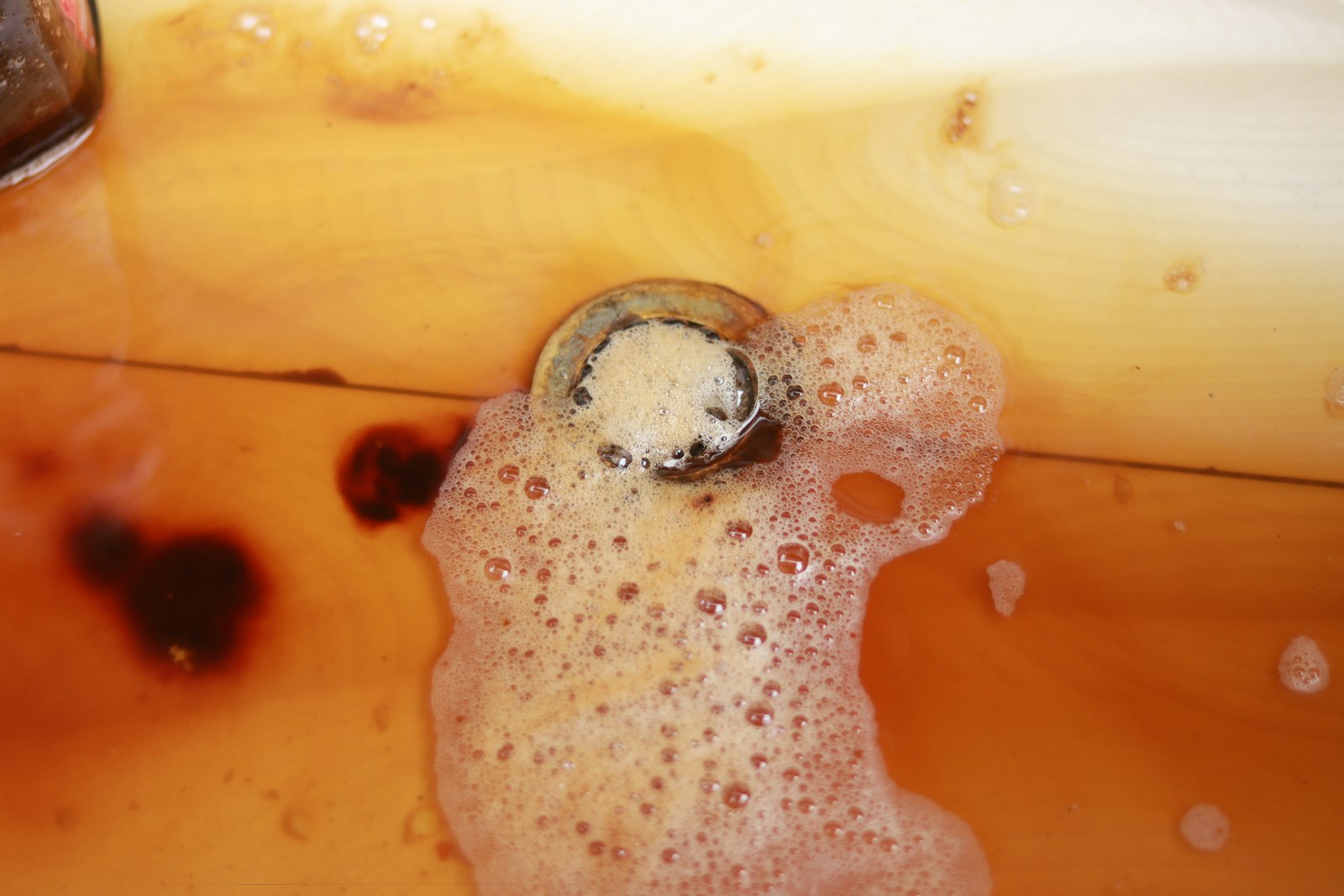
The surest way to tell if your main line is clogged is that more than one fixture backs up at the same time. A single slow sink is a branch-line clog. But when you flush a toilet and the shower gurgles, or the washing machine drains and the tub fills with grey water, the blockage is downstream of every fixture, in the main sewer line.
Other tell-tale signs in Kitsap County homes: sewage or standing water at the outdoor cleanout, a lowest-level drain that backs up first, and a sewage smell in the yard or crawl space. This guide walks through the tests you can run yourself before you call for sewer line cleaning in Kitsap County.
Main line clog or single clogged drain? The quick test
Every drain in your house feeds into one 4-inch pipe that leaves the foundation and runs to the sewer main or your septic tank. That pipe is the main line (also called the sewer lateral or building sewer).
Because everything passes through it, a main line clog shows up in several places at once, while a branch clog only affects the fixtures upstream of it.
| What you notice | Single clogged drain | Main line clog |
|---|---|---|
| How many fixtures are affected | One sink, tub or toilet | Two or more, often in different rooms |
| Where water appears | Backs up in the fixture you just used | Backs up in a different, lower fixture (tub, shower, floor drain) |
| Toilets | Flush normally elsewhere | Gurgle, bubble or rise when another fixture drains |
| Outdoor cleanout | Dry | Wet, full, or overflowing |
| Plunging or snaking the fixture | Fixes it | Does nothing, or the problem moves to another drain |
| Smell | Localized to one drain | Sewer gas in several rooms, the crawl space, or the yard |
If your symptoms sit in the right-hand column, stop using water in the house. Every gallon you send down a blocked main line has nowhere to go but back up through the lowest drain.
7 signs your main sewer line is clogged
- Multiple drains are slow or backed up at once. The number one sign. Kitchen sink, bathroom sink and shower all draining slowly on the same day is not a coincidence.
- Water comes up in a fixture you did not use. Flush the toilet and water appears in the shower pan, or run the washer and the utility sink fills.
- Toilets gurgle or bubble. Air trapped behind the clog is being pushed back through the nearest trap.
- The lowest drain in the house backs up first. In Kitsap County that is usually a ground-floor tub, a daylight-basement shower, or a floor drain near the water heater.
- Sewage or standing water at the cleanout. The cleanout is the capped 3- or 4-inch pipe near the foundation or along the path to the street. If the ground around it is wet or the cap is weeping, the line is blocked downstream of it.
- A sewage smell outdoors, in the crawl space, or near floor drains. Traps are being pushed or siphoned dry, letting sewer gas in.
- Soggy, extra-green patches in the lawn along the sewer route. This points to a cracked or separated pipe rather than a simple clog. It is leaking into the soil and, in our wet season, letting groundwater in as well.
How to check for a main line clog yourself
These four checks take about fifteen minutes and cost nothing. They will not clear the line, but they will tell you whether you have a fixture problem or a main line problem.
- Run the lowest-fixture test. Go to the lowest drain in the house. Have someone flush a toilet on the floor above, or run a bathroom sink for a minute. If water rises or gurgles in the lower drain, the main line is blocked.
- Check every drain, not just the one that complained. Fill each sink halfway and pull the stopper. Two slow drains in different rooms means the clog is past the point where their branch lines join.
- Open the cleanout. Find the capped pipe outside (in newer homes it is usually in the front yard near the foundation; in older Bremerton and Port Orchard homes it may be in the crawl space or missing). Loosen the cap slowly and stand clear. Standing water in the cleanout confirms a blockage between the cleanout and the street. A dry cleanout with backups inside points to a clog between the house and the cleanout.
- Look outside. Walk the line from the house toward the street or septic tank. Wet, sunken, or unusually lush spots, or a sewage smell, mean the pipe itself has failed.
If the cleanout is full, do not run any more water and do not try to bail it. The fix from here is a powered auger or hydro jetting from the cleanout, which is how Pelican Plumbing handles most clogged drain repair calls in Kitsap County.
Clog or broken pipe? What the pattern tells you
A main line that clogs once is usually just a clog: a wad of wipes, a grease plug, or a toy. A main line that clogs every few months has a defect that keeps catching debris, and snaking it again only buys time.
| Pattern | Most likely cause | Right next step |
|---|---|---|
| First backup, cleared with one snaking, no repeat | Debris (wipes, grease, paper) | Done. Stop flushing wipes. |
| Backs up every 3 to 12 months, worse in fall and winter | Tree roots entering a joint or crack | Camera inspection, then hydro jetting or a spot repair |
| Recurring backups plus soggy lawn or a sinkhole | Broken, separated or collapsed pipe | Camera inspection, then repair or lining |
| Home built before about 1975, line never replaced | Clay, cast iron or Orangeburg pipe at end of life | Camera inspection before any big snaking job |
| On septic, backups plus a wet drainfield | Full tank or failing drainfield, not a clog | Pump and inspect the tank first |
Kitsap County has a lot of the third and fourth rows. Bremerton’s Navy-era neighborhoods, older Port Orchard and Manette homes, and many 1960s and 70s houses in Poulsbo and Silverdale still run on clay or cast-iron laterals, and a few still have Orangeburg, a tar-impregnated fiber pipe that softens with age.
Add mature Douglas firs, cedars and bigleaf maples whose roots hunt for water, and you get the recurring fall backup a camera finds every time. Our guide to sewer line repair in Kitsap County covers what happens after the camera finds a break.
One local wrinkle: the pipe on your side of the property line is yours to maintain, not the utility’s. The City of Bremerton’s wastewater standards (Division 6, Wastewater) keep the lateral from the main to the property line under the City’s control and make the side sewer from the property line to the structure the property owner’s responsibility.
Kitsap County Public Works draws the same line, defining the “building sewer” as the pipe from the property line to the house (Kitsap County, Connect to Sewer). If the clog is in the street, the utility clears it. If it is on your side of the property line, you do.
On septic in Kitsap County? Check the tank first
Kitsap County’s Clean Water Kitsap program reports more than 56,000 septic systems in Kitsap County, so for a large share of homes in Kingston, Hansville, Seabeck, Olalla and rural Poulsbo, the “main line” runs to a tank, not a street main. From inside the house, a full or failing septic system looks identical to a main line clog.
The differences are outside: a wet, spongy or unusually green drainfield, a sewage smell over the tank, and often a tank that has not been pumped in years. Snaking the line into a full tank does nothing. If you are on septic and the tank has not been pumped in three to five years, start there.
What not to do when the main line is clogged
- Do not pour chemical drain cleaner down any fixture. It sits in the blocked pipe, damages older cast iron, and gives the plumber a caustic bath when the line is opened.
- Do not keep plunging. Plunging a toilet when the main line is blocked just pushes sewage toward the next-lowest drain.
What it costs to diagnose and clear a main line in Kitsap County (2026)
National cost guides put a typical main line clearing in the low hundreds, with hydro jetting and camera work on top when the clog keeps coming back. Kitsap pricing runs close to these ranges, with the usual premium for weekend and night calls.
| Service | Typical 2026 range | Source |
|---|---|---|
| Main sewer line clog clearing (all methods) | $187 to $569, average $376 | HomeAdvisor |
| Snaking / augering the main line | $200 to $500 | HomeGuide |
| Hydro jetting (roots, grease, scale) | $600 to $1,400 | HomeGuide |
| Tree-root removal add-on | $200 to $600+ | HomeGuide |
| Sewer camera inspection | $125 to $500 (up to $750 with no cleanout) | HomeGuide |
The spread on camera inspections is mostly about access: a home with a proper cleanout is a quick scope, and a home with none, where the camera goes in through a pulled toilet, costs more.
Pricing disclaimer: The cost estimates above are based on current regional market research and industry data as of 2026. Actual prices vary depending on home size, pipe material, cleanout access, the cause of the blockage, labor rates, and other project-specific factors. Always request a free, written estimate from a licensed local plumber before budgeting for your project. Contact Pelican Plumbing for a no-obligation quote.
When a main line clog is an emergency
A main line clog becomes an emergency the moment sewage is coming out of a fixture rather than just failing to go down. Raw sewage on a bathroom floor or pooling in the crawl space is a health hazard and a water-damage clock that is already running. The same goes for a backup when you have only one bathroom.
Shut off water use, keep people and pets out of the affected area, and call an emergency plumber in Kitsap County. If the drains are merely slow and nothing is overflowing, a next-day appointment is fine and will cost less.
Frequently Asked Questions
How do I know if my main sewer line is clogged or just one drain?
Count the fixtures. One slow or blocked fixture is a branch clog. Two or more fixtures backing up at the same time, especially when using one makes water appear in another, means the main sewer line is clogged. A wet or overflowing outdoor cleanout confirms it.
What does a clogged main line sound like?
Gurgling and bubbling. When a toilet burps after the tub drains, or a floor drain glugs when the washer empties, air trapped behind the clog is being forced back through the nearest trap. Silent, slow drains point to a partial clog; loud gurgling usually means it is nearly closed.
Can I unclog a main sewer line myself?
Sometimes, if the clog is close to the cleanout and you own a proper sewer auger. For most Kitsap County homeowners it is not worth it. Rental drum augers are heavy, cables snap inside old clay and Orangeburg pipe, and a plunger or chemical cleaner will not reach a 4-inch main. A professional snaking runs about $200 to $500 and comes with a camera if the clog recurs.
Why does my main line keep clogging in the fall and winter?
In Kitsap County the usual answer is tree roots. Roots grow toward the moisture around a cracked or separated joint, and by fall they have filled enough of the pipe to catch paper and grease. Heavy rain then adds groundwater through the same cracks. A camera inspection will show whether jetting the roots is enough or the section needs repair.
How long does it take to clear a main line clog?
A straightforward snaking from the cleanout takes about one to two hours. Hydro jetting a root-filled line takes two to three hours. If the camera finds a break, clearing gets you flowing the same day and the repair is scheduled separately.
Get a straight answer from Pelican Plumbing
If two or more drains in your home are backing up, you already know the answer: the main line is clogged. Pelican Plumbing clears main sewer lines throughout Kitsap County, including Bremerton, Silverdale, Port Orchard, Poulsbo, Bainbridge Island and Gig Harbor, with powered augers, hydro jetting, and camera inspection so you know whether it was a one-time clog or a pipe that needs attention.
Call (360) 551-1981 for same-day service, or contact us online to schedule a drain cleaning or sewer camera inspection.